
🎨 What is Majolica
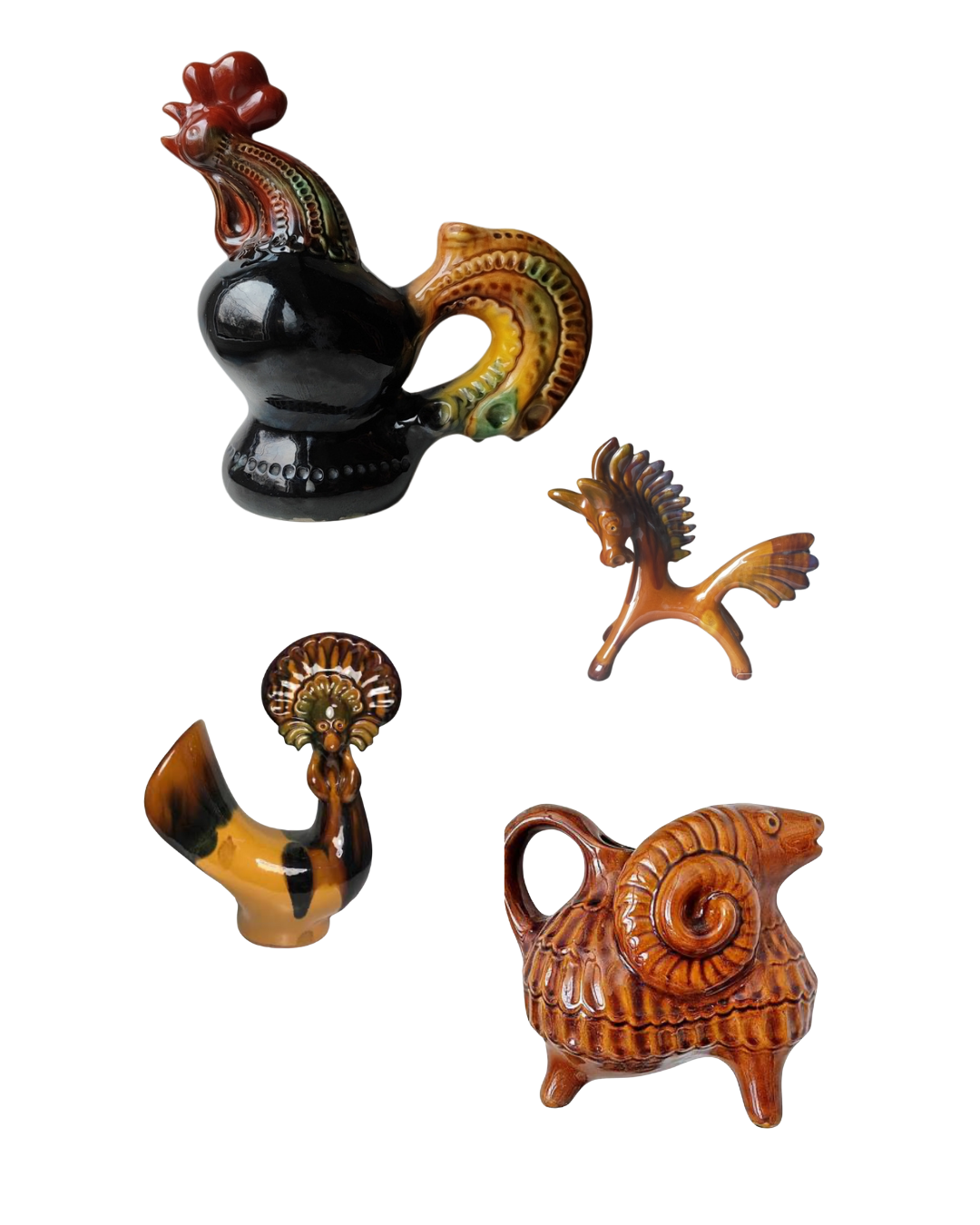
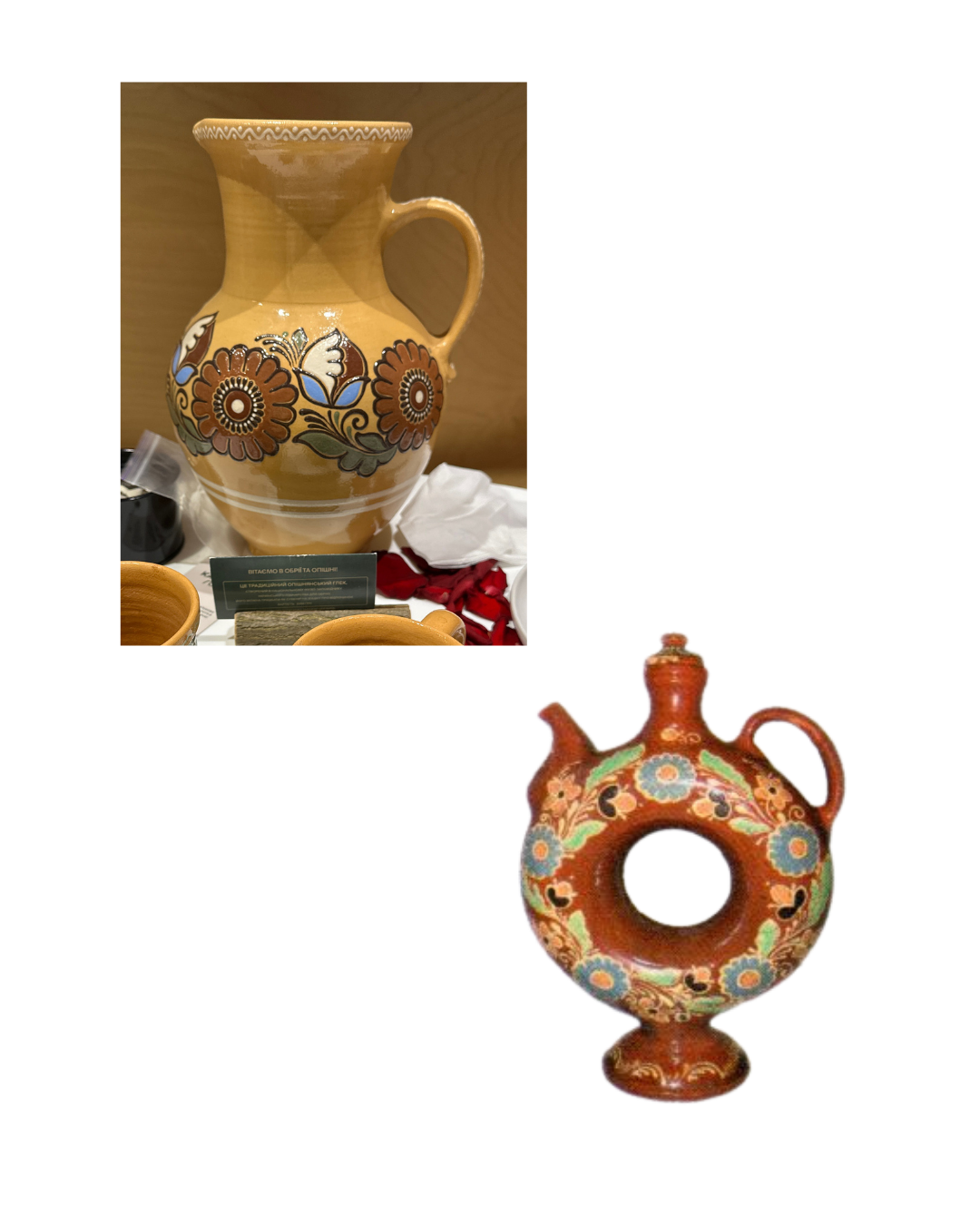
Majolica is hand-painted ceramics covered with colored engobe and glaze — a craft that has long been part of Ukrainian decorative tradition.
🎨 Value
These are ceramic pieces coated with glazed paint. They combine:
- Practical function: often used as decanters or vessels for pouring liquids.
- Decorative value: part of everyday life as home decor or meaningful gifts.
- Collectible value: today, many collectors seek these figurines as unique examples of Ukrainian ceramics.
🐓 Vasylkiv Majolica
🏭 Where and when was it made?
These rooster and ram figurines were produced in the city of Vasylkiv (Ukraine) at the majolica factory, approximately from the 1960s to the 1980s.
👩🎨 Who created the form?
The design is most often attributed to Valerii Protoriev and Nadiia Protorieva — artists who worked at the Vasylkiv factory and created ceramic pieces in the majolica style.
🐓 The Rooster That Stood Strong
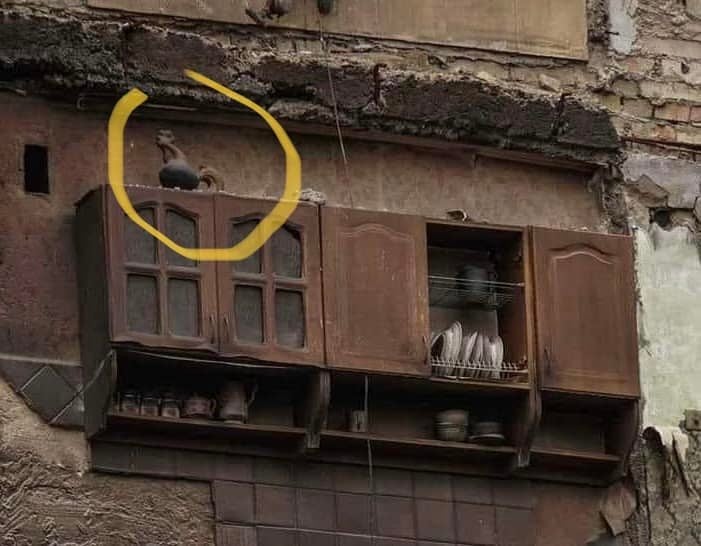
After the bombing in Borodianka, when a kitchen cabinet with a ceramic rooster remained hanging on a разрушed wall, the image spread around the world.
A phrase appeared: “Be as strong as this kitchen cabinet” — and with it, a new symbol of Ukrainian resilience.
The rooster, originally created as a simple decorative object, suddenly became a sign that home is not walls, but a spirit that cannot be destroyed.
People began to recognize it, search for it, recreate it. It appeared in illustrations, contemporary art, pysanky, and creative interpretations around the world.
The ceramic rooster became an international symbol — a gift, a monument, even a postage stamp — an image that speaks without words:
Ukraine stands. Ukraine lives. Ukraine remembers.
Today, this rooster is no longer just a clay form.
It is a story about resilience, the warmth of home, and the light that remains even among ruins.
🐓 Kosiv Majolica
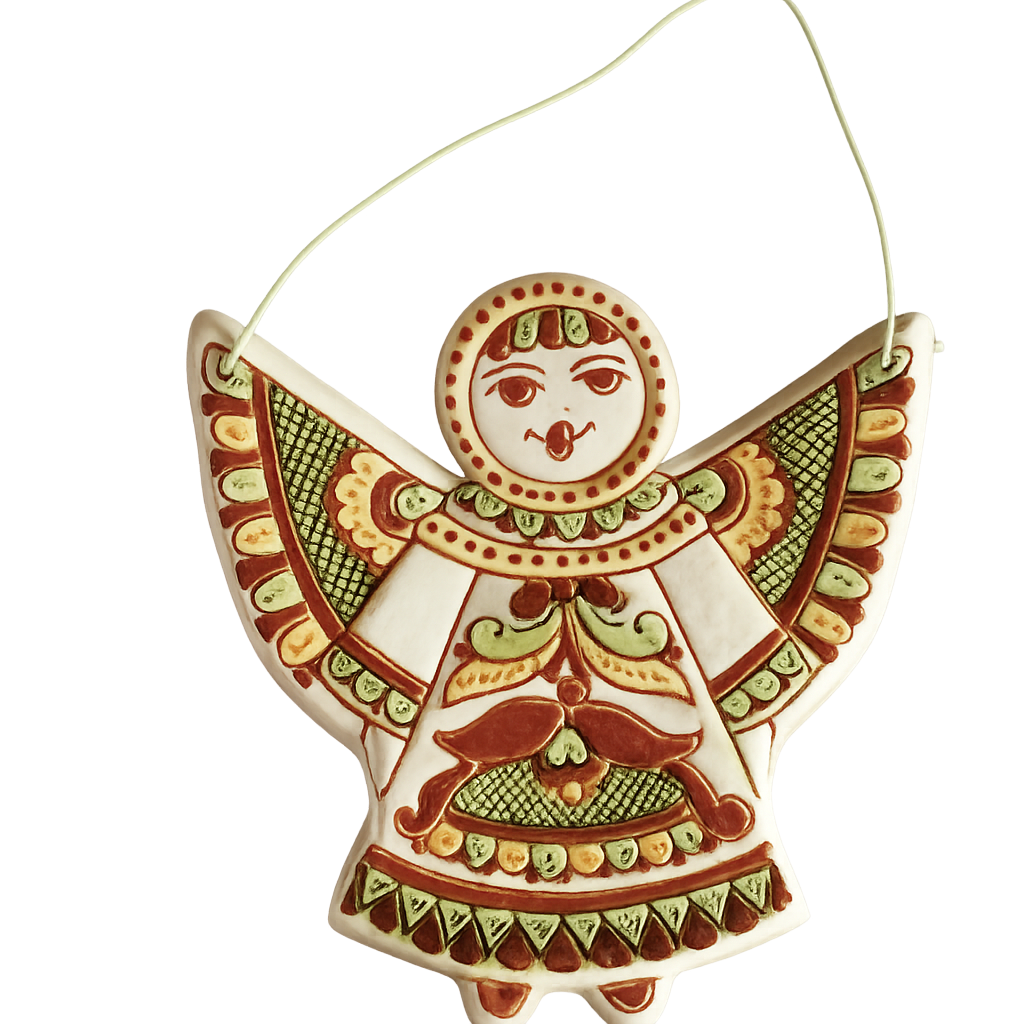
The angel stencil in this set was inspired by a Christmas ornament created by the workshop of the Trots family.
The workshop was founded by Ihor and Khrystyna Trots in 1997.
In 2016, their daughter Maria-Teresa joined the family craft.
Over the years, the artisans have explored various techniques, but most often they work in the style of Kosiv ceramics, experimenting with forms and decorative details.
🏺 Opishnia — the Heart of Ukrainian Ceramics
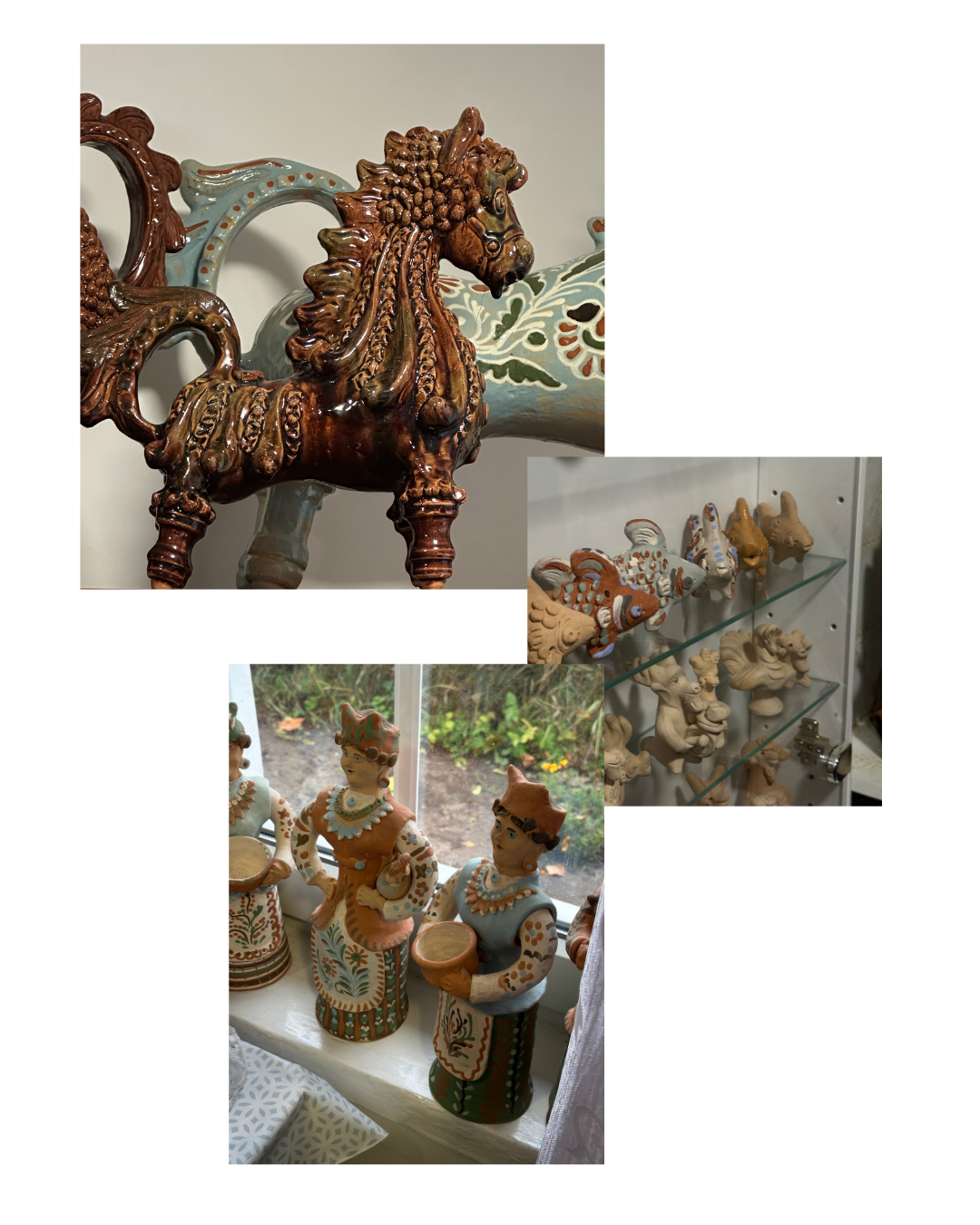
Opishnia (Poltava region) is one of the oldest and most important pottery centers in Ukraine.
Here, ceramics were never just souvenirs — they were part of everyday life and worldview.
In the 20th century, Opishnia was home to:
- family pottery workshops
- artisan cooperatives
- experimental studios connected to museums and educational institutions
It was here that the distinctive style of sculptural figurative ceramics was formed.
👨🎨 Artist: Vasyl Omelianenko
and his daughter
Opishnia, second half of the 20th century
Vasyl Omelianenko is one of the well-known masters of Opishnia,
working with sculptural ceramics: horses, rams, and фантастичні creatures.
A special feature of these works is family co-creation.
Many pieces were created together with his daughter, passing down not only technique, but also a sense of form, character, and rhythm.
We hope this set helped you discover Ukrainian majolica more closely —
to see in it not only the beauty of form, but a living tradition worth preserving and continuing. ✨